
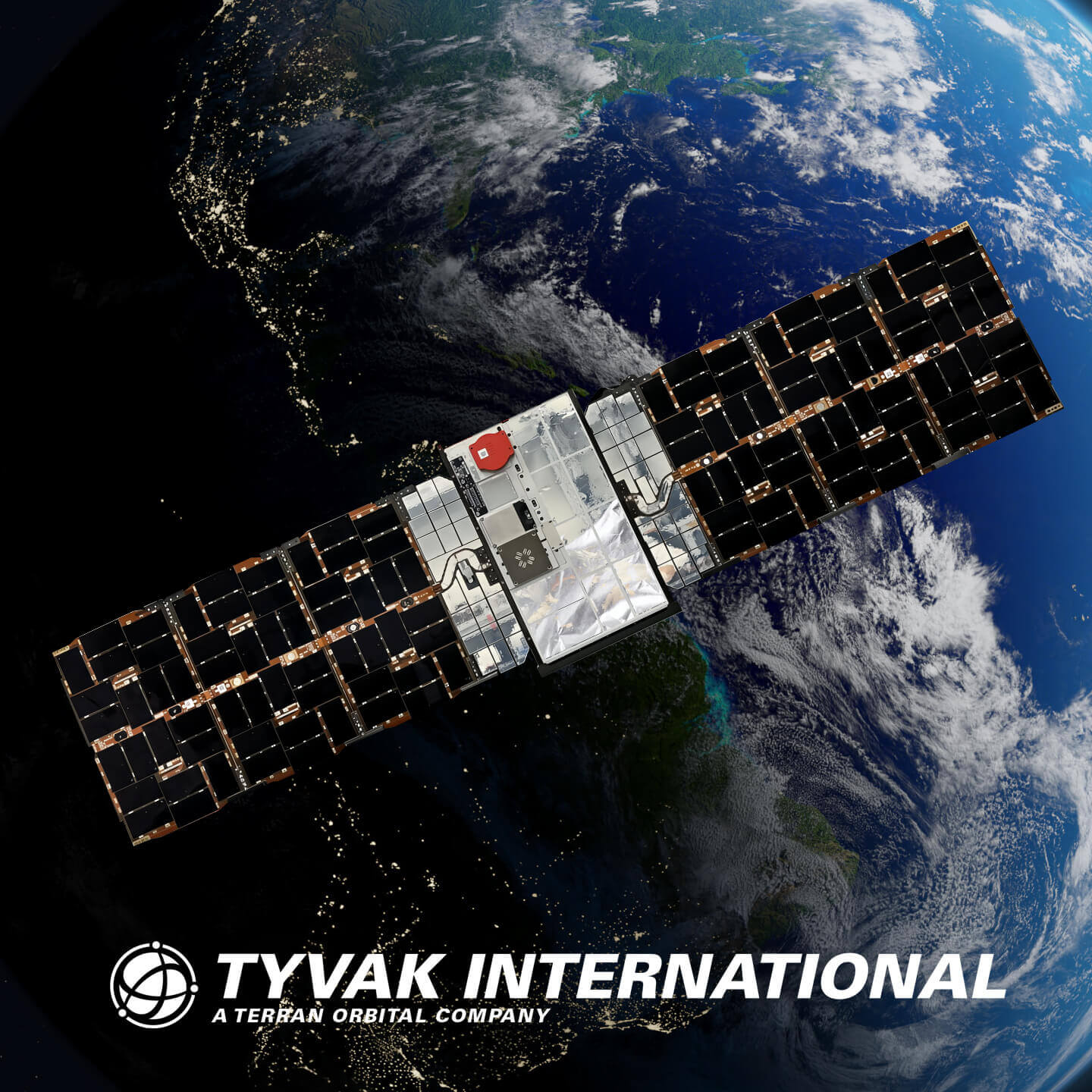
Italian aerospace excellence, together with the Italian Space Agency (ASI) and the European Space Agency (ESA), is leading the roadmap for European connectivity
The LIDE (LIve DEmonstration) mission has been successfully completed following a year-long technology demonstration, marking a major milestone for the Italian and European aerospace industry.
Global connectivity via Low Earth Orbit (LEO) satellites is no longer just a theoretical promise, but a tangible and validated reality.
Launched in July 2025, the nanosatellite developed by Tyvak International and an entirely Italian consortium has officially paved the way for 5G communications directly from space, turning an engineering ambition into a strategic operational capability of significant value. Potential applications include telemedicine, civil protection in the event of natural disasters and, last but not least, defense requirements, thanks to the characteristics of LEO orbits combined with the use of 3GPP standards, which underpin the world’s most widely deployed mobile networks.
At the heart of this achievement is a 12U CubeSat, entirely designed and built to integrate an advanced payload developed by Picosats. Funded by ESA’s Space for 5G/6G & Sustainable Connectivity program under the Agency’s Advanced Research in Telecommunications Systems (ARTES) and supported by ASI, LIDE was conceived with a specific and challenging objective: to establish, characterize and measure a 5G communication link between ground terminals via the satellite, in full compliance with international standards and specifications.
The tests conducted in the field confirmed the mission’s success. The nanosatellite successfully established and maintained a bidirectional connection with terminals located at the ESTEC 5G/6G Lab in Noordwijk, the Netherlands. The system accurately recorded connectivity from extremely low elevation angles, maintaining excellent signal stability throughout each satellite pass and enabling precise measurement of key parameters, including throughput and signal-to-noise ratio (SNR).
The innovative scope of LIDE extended well beyond routine testing. Recognized by ESA as a fully-fledged in-orbit test platform available to the industrial ecosystem, the satellite was integrated with state-of-the-art software solutions.
For example, LIDE enabled an interoperability demonstration conducted by Celeste Technologies, an Italian deep-tech company developing 5G/6G software-based Radio Access Network (RAN) solutions for Non-Terrestrial Networks (NTN). Using the satellite’s transparent payload, a successful end-to-end link compliant with 3GPP Release 17 was established between Celeste’s SmartgNB, installed at ESA’s ESTEC laboratories, and a third-party ground terminal. Thanks to LIDE, interoperability between solutions from different vendors was verified in orbit under real operating conditions: a concrete step towards an NTN ecosystem built on common standards. “With the LIDE mission, ESA and its entire industrial ecosystem have had access to an in-orbit experimental platform to verify 5G NTN links between a nanosatellite and compact ground terminals. This made it possible to carry out some of the world’s first demonstrations of a 3GPP 5G NTN link via a LEO satellite, allowing tests to be conducted under real operating conditions and the initial investigation of interoperability with solutions developed by different terminal manufacturers. This is a concrete step towards a satellite ecosystem based on common standards,” says Alberto Ginesi, Head of the Telecom System Section within ESA’s Directorate of Technology, Engineering and Quality, and Technical Officer for the activity.
According to Antonio Franchi, Head of the 5G/6G NTN Programme Office, “LIDE represents one of the flagship elements of the entire ecosystem of LEO NTN in-orbit experiments developed by ESA under its ‘Space for 5G/6G and Sustainable Connectivity’ programme.”
The data and experience gathered represent a fundamental building block in Europe’s roadmap towards the development of a fully-fledged satellite broadband communication service.
Building on the results achieved by LIDE, the European Space Agency has decided to once again entrust Tyvak International with leading a new Italian consortium, once again comprising Picosats and now joined by Celeste Technologies, to develop another in-orbit demonstration mission: TIDE. Its definition phase is scheduled for completion by the end of 2026, with implementation expected to begin in 2027.
“The use of open standards for satellite telecommunications, such as 5G NTN, is the path chosen by ASI to ensure the most effective involvement of the industrial supply chain at both national and European level, leveraging and adapting technologies partly developed for terrestrial applications while fostering healthy industrial competition,” says Giancarlo Varacalli, Head of the Telecommunications and Navigation Office at the Italian Space Agency.
“In a future in which satellite connectivity will necessarily have to be seamlessly integrated with terrestrial networks from the user’s perspective, it is important to invest in demonstration missions, as was the case with the LIDE project, in order to build up real-world experience and be fully prepared to address the technological and operational challenges of the coming years. International competition in this sector is extremely fierce, but Italy – and Europe more broadly – has all the expertise and potential required to play a leading role.”
“The completion of the LIDE mission demonstrates the robustness of nanosatellite technology and the ability of Italian industry to drive innovation in Non-Terrestrial Networks,” says Margherita Cardi, recently appointed VP of European Operations & Head of Strategic Programs at Tyvak International.
“Demonstrating the validity of the 5G standard in orbit and building on these results with the new TIDE mission places us at the heart of the evolution of European space telecommunications, reaffirming the value of our collaboration with ASI, ESA and our outstanding industrial partners.”
The TIDE mission represents the next step in the collaboration between ESA, ASI, Tyvak International and their industrial partners, initiated with LIDE.
The mission will address one of the remaining challenges in the integration of terrestrial and satellite networks: demonstrating that a 5G link via a Low Earth Orbit satellite can operate efficiently in Time Division Duplexing (TDD) mode, alternating between transmission and reception over time.
TDD enables more flexible use of the spectrum and will therefore make it possible to extend satellite connectivity to new frequency bands. TDD transmissions in the NTN domain are of considerable international interest and are receiving increasing attention within 3GPP standardization activities. However, they require adaptations to the 5G protocol, which will be designed and implemented as part of the mission.
TIDE is therefore at the forefront of 5G and 6G NTN network development, providing, for the first time, an in-orbit experimental platform for TDD operation. If validated through in-orbit testing, this capability will open up new possibilities for designing interoperable 5G and 6G satellite networks and help strengthen Europe’s expertise in non-terrestrial communications, benefiting the entire NTN industrial community.
About Tyvak International
Founded in Turin in 2015 as the European subsidiary of Terran Orbital, the company has around 50 employees and annual revenues of over €10 million. In 2024, it became part of the Lockheed Martin Group. The company designs and manufactures everything from small nanosatellites, with a volume-efficient design and a mass ranging from 10 to 30 kilograms, to microsatellites weighing up to 300 kilograms. The challenge is to deliver outstanding performance in space despite their compact size.
Tyvak has built and launched 18 satellites for commercial and institutional clients. Its projects include missions such as PhiSat-1, developed for the European Space Agency (ESA), a pair of satellites designed for Earth observation, and Iperdrone, carried out in collaboration with the Italian Space Agency (ASI). The latter aims to perform orbital maneuvers around a target, laying the groundwork for so-called in-orbit servicing: the provision of services in space, ranging from refueling to maintenance.
Tyvak designs, launches and operates satellites from its own control center in Turin, serving private companies in the telecommunications, narrowband IoT and Earth observation sectors.
The company has also contributed to SpeiSatellites, the Vatican’s first satellite, providing support to the Polytechnic University of Turin.
Its latest and most remarkable achievement takes it beyond Earth’s orbit: Milani, a CubeSat traveling aboard the ESA’s Hera spacecraft, which is heading towards the binary asteroid system Didymos as part of a planetary defense mission.
ESA’s Space for 5G/6G & Sustainable Connectivity program
The European Space Agency (ESA) is Europe’s gateway to space, coordinating the financial and intellectual resources of its Member States to conduct space programs and activities. ESA’s ‘Space for 5G/6G & Sustainable Connectivity’ strategic program line is advancing 5G and 6G technologies to support the digital transformation of Europe by integrating satellite and ground networks. This fusion of terrestrial (TN) and non-terrestrial networks (NTN) will revolutionize how we live, work and communicate in terms of smart mobility, global coverage, security and network resilience. The programme aims to promote the standardisation of seamless global connectivity for various industries and applications, including telemedicine, tele-education, and autonomous vehicles, airplanes and ships.
This program is part of Advanced Research in Telecommunications Systems (ARTES). It is overseen by ESA’s Commercialisation and Industry Partnership (CIP) Directorate and aims to connect everyone, everywhere, at all times.
Learn more at https://resilience.esa.int/artes-4-0-programme-overview/space-for-5g-6g-sustainable-connectivity
Media Contact
Sec&Associati
Cristina Rosso
346 7376254
